Introduction
A gas suppression system is an advanced fire protection solution that controls or extinguishes fires without using water. It is widely used in areas where water can damage equipment, such as data centers, server rooms, and electrical panels.
In modern industries, protecting critical assets is essential. Therefore, gas suppression systems play a vital role in fire safety by offering fast, clean, and effective fire control in situations where traditional methods may fall short.
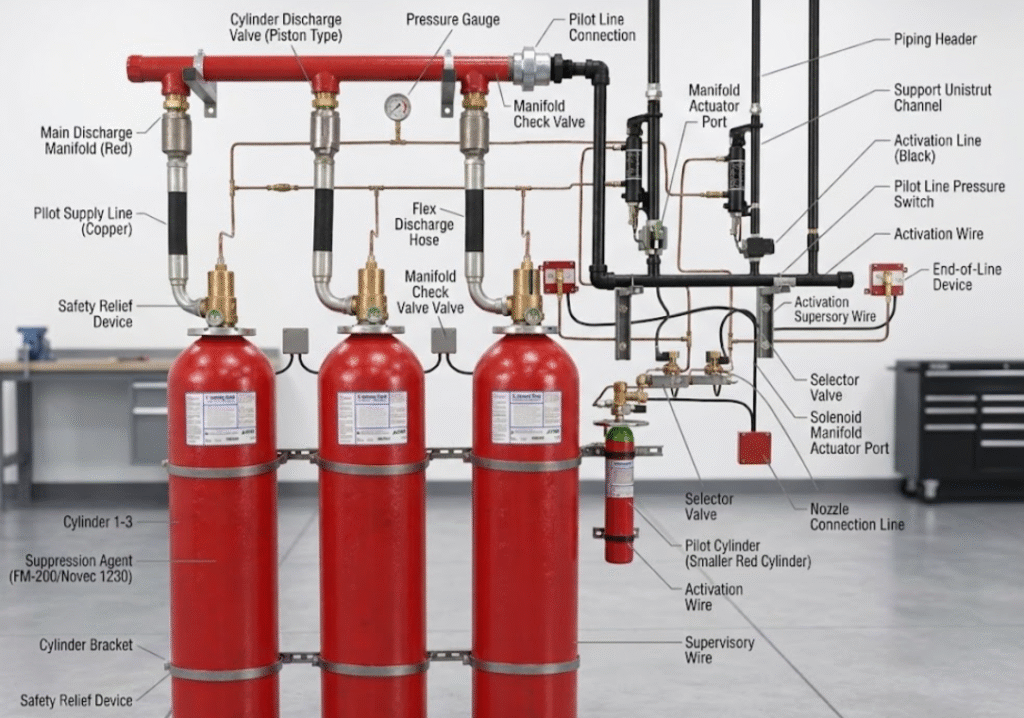
To better understand how these systems protect sensitive environments, let’s explore what a gas suppression system is.
A gas suppression system is a fire protection system that uses gas to extinguish fire. It works by reducing oxygen levels or interrupting the chemical reaction of fire.
Unlike water-based systems, it does not damage sensitive equipment and leaves no residue after discharge.
Types of Gas Suppression Systems
1. Inert Gas Systems
These systems use gases like nitrogen or argon. They reduce oxygen levels to stop combustion.
2. Chemical Gas Systems
These include FM-200 and Novec 1230. They absorb heat and break the fire reaction.
3. CO₂ Systems
Carbon dioxide systems are very effective but can be dangerous for humans, so they are used in unoccupied areas.
How a Gas Suppression System Works
The system works in the following steps:
- Fire is detected by smoke or heat detectors.
- The signal is sent to the control panel.
- Alarm and delay timer are activated.
- Gas is released through nozzles.
- Fire is suppressed quickly.
This process usually takes only a few seconds.
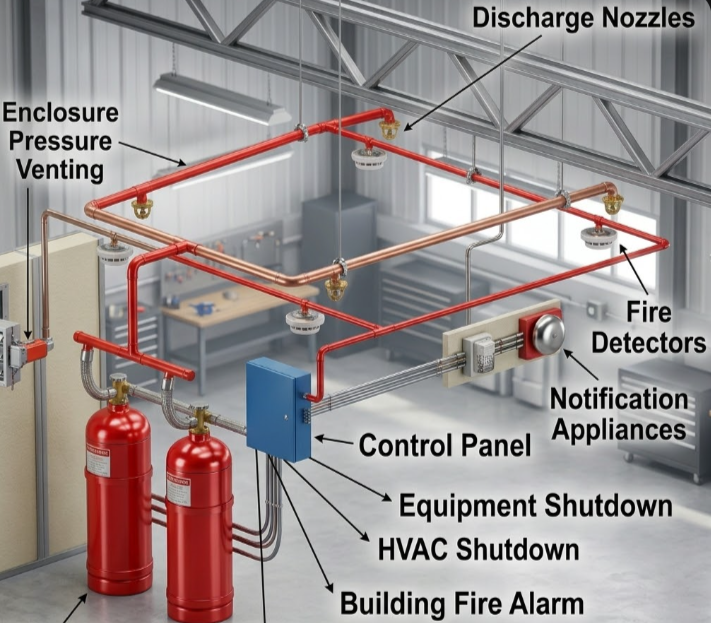
Main Components
- Gas cylinders
- Piping system
- Discharge nozzles
- Control panel
- Smoke/heat detectors
- Alarm system
Each component plays an important role in proper system operation.
Advantages
- No water damage
- Fast fire suppression
- Safe for electrical and electronic equipment
- Clean system (no residue)
- Minimal downtime
Disadvantages
- High installation cost
- Requires a sealed room
- Risk of gas leakage
- Safety concerns in CO₂ systems