Pump Alignment Importance: Complete Guide for Engineers
1. Introduction
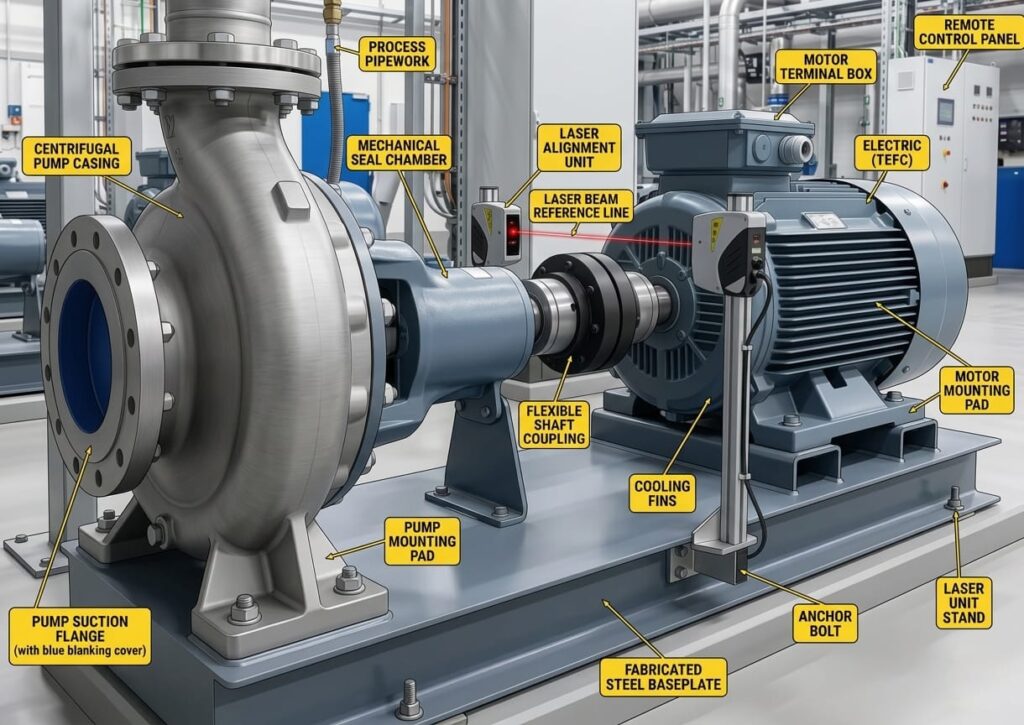
Pump alignment is a very important part of maintaining rotating equipment. It ensures that the pump shaft and motor shaft are properly aligned during operation.
The Pump Alignment Importance cannot be ignored because even a small misalignment can cause vibration, energy loss, and equipment damage. Therefore, proper alignment is necessary for smooth operation and long equipment life.
2. What is Pump Alignment?
Pump alignment is the process of aligning the centerlines of the pump shaft and motor shaft so they rotate correctly together.
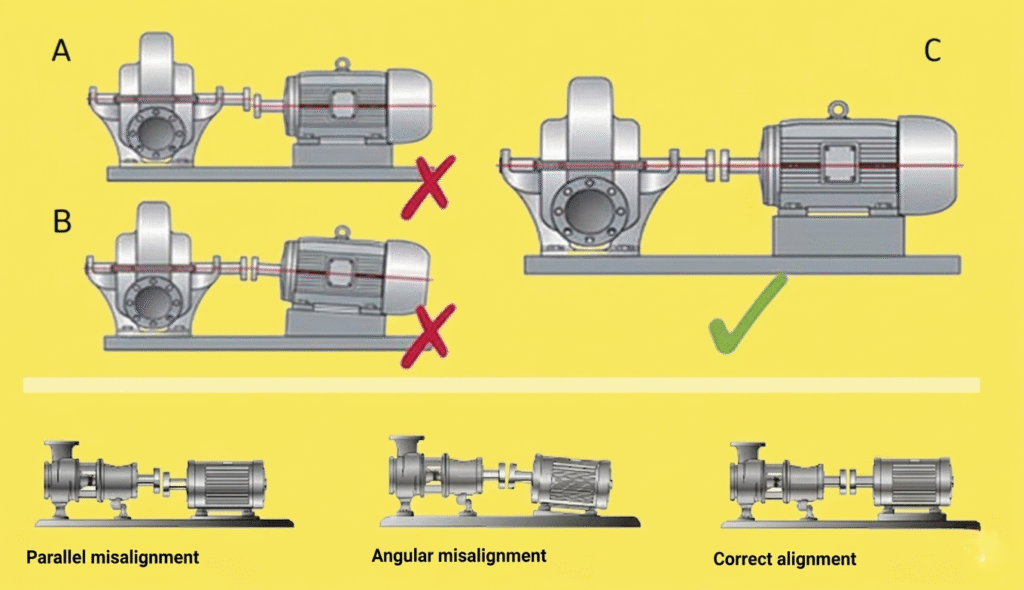
There are two main types of misalignment:
- Angular Misalignment: Shafts are at an angle
- Parallel Misalignment: Shafts are parallel but not in the same line
If shafts are not aligned properly, it creates stress and leads to failure.
3. Why Pump Alignment is Important
Understanding Pump Alignment Importance helps engineers avoid failures and improve performance.
3.1 Increases Equipment Life
Proper alignment reduces wear on bearings, seals, and couplings.
3.2 Improves Efficiency
Alignment helps transfer power smoothly and reduces energy loss.
3.3 Reduces Vibration and Noise
Correct alignment ensures smooth and quiet operation.
3.4 Lowers Maintenance Cost
Fewer breakdowns mean less repair and maintenance cost.
3.5 Improves Safety
Proper alignment reduces the risk of sudden failure and accidents.
4. Common Causes of Misalignment
Misalignment can occur due to:
- Poor installation
- Thermal expansion
- Weak foundation
- Pipe strain
- Normal wear and tear
Regular checks are important to avoid these issues.
5. Signs of Pump Misalignment
Common signs include:
- High vibration
- Unusual noise
- Overheating bearings
- Frequent seal failure
- Coupling damage
These signs should not be ignored.
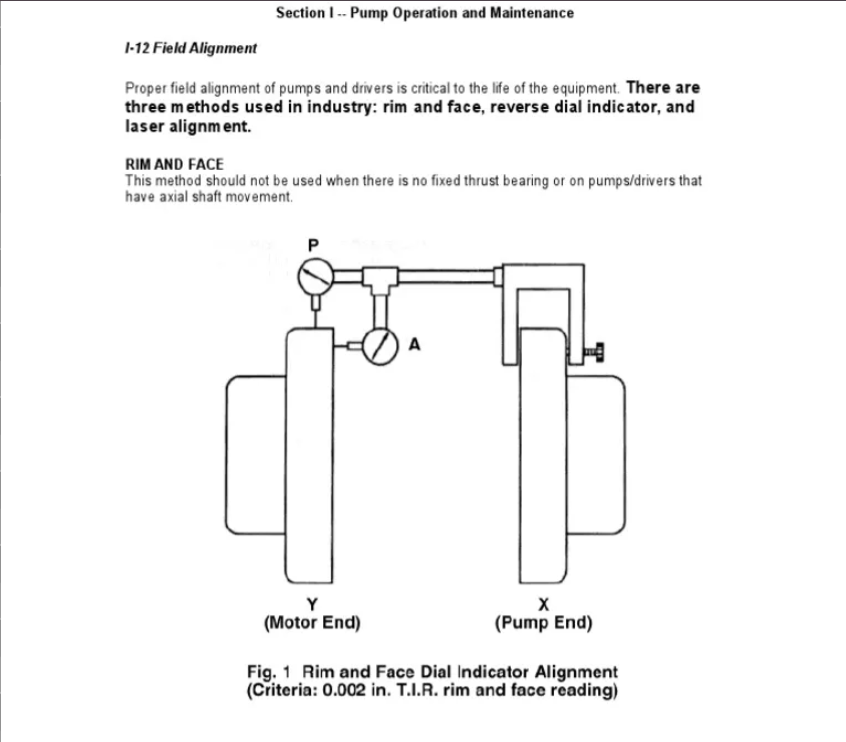
6. Methods of Pump Alignment
6.1 Straight Edge Method
Simple but less accurate.
6.2 Dial Indicator Method
More accurate and commonly used.
6.3 Laser Alignment Method
Highly accurate and modern method.
7. Pump Alignment Procedure
- Check foundation and bolts
- Correct soft foot
- Perform rough alignment
- Do final alignment using proper tools
- Recheck after tightening bolts
8. Common Mistakes to Avoid
- Ignoring soft foot
- Not considering thermal expansion
- Skipping final checks
- Improper bolt tightening
9. Best Practices
- Align pump after installation
- Check alignment regularly
- Use proper tools
- Maintain good foundation
- Avoid pipe stress
10. Conclusion
The Pump Alignment Importance is clear. It improves efficiency, reduces maintenance cost, and increases equipment life.